
Commentary
The midterms: where things stand
The House, the Senate and nine races to know before November 3.
 Rotem Oreg-KaliskyNovember 1, 2026 · Translated from Hebrew · Originally published on X
We are all still recovering from our own election here in Israel and trying to work out what tomorrow will bring, but the midterms are approaching fast: on November 3 the last Americans who have not yet voted will cast their ballots and elect the 120th U.S. Congress.
In the House, the accepted starting point is that Republicans are expected to lose their (already narrow) majority, because of a combination of the soaring cost of living, the unpopular war in Iran and the renovation projects the president is carrying out across Washington. The main question is by how much. RealClearPolitics (considered right-leaning among the polling averages) estimates that Democrats have 192 safe seats against only 156 safe Republican seats, 15 "likely" Democratic seats against 12 considered "likely" Republican, and no fewer than 20 seats leaning Democratic against only 14 leaning Republican. In all, 26 seats across the country are considered truly competitive, with both candidates' chances more or less even.
A quick calculation shows that even if Democrats lose every competitive seat and win no seat that leans or is "likely" Republican, Republicans would win only 208 seats and would still need ten more seats that are considered to lean Democratic. That may not be impossible, but it would take a dizzying success for the governing party.
I am a little suspicious of the polls (RCP's included) and, unusually for me, I will give a forecast, but a conservative one: the final result will favor Democrats by a medium-to-high margin, meaning a margin in the twenties (for the sake of argument: 230–205 for the Democrats).
Why a conservative forecast? We know polls tend to underestimate Republican strength (though, it should be said, mainly when Trump is on the ballot), and two main issues could play in Republicans' favor. One is immigration, where the president managed to keep his promise to close the border (and the deportations and detentions of legal immigrants that made headlines for weeks in 2025 have dropped off the news agenda). The other is the culture war: Democrats avoid it at all costs and focus on an "everyday life" campaign, but Republicans have good reason to raise it again.
So the real political event is in the Senate. There, the combination of circumstances, together with the fact that this is a Senate cycle in which Republicans have to defend more seats, puts Democrats in a fairly good position to gain ground. To secure a majority they need four net gains (to control the agenda and the committees), and a stable majority takes five net gains, to offset opposition from John Fetterman (Pennsylvania). In this post I review some of the key races (though this time I won't give a forecast), including what you need to know about each.
1. Alaska
I already wrote this week about the unusual race in Alaska, between the Democratic candidate Mary Peltola and the incumbent senator, Dan Sullivan (according to RCP, Peltola leads by 1.2% on average, and by 3.8% according to Nate Silver). Although Alaska is a deeply Republican state, it has already elected a moderate senator, Lisa Murkowski, who consistently votes against Trump on a series of key issues, and Peltola, who is running a fairly conservative campaign, including on immigration and gun rights, has already served as Alaska's member of Congress.
A New York Times investigation claimed that the Peltola camp recruited another man named Daniel Sullivan to confuse voters. Trump called for Peltola to be taken off the ballot, and the Justice Department demanded that Alaska throw out the results if Sullivan loses. The state's Republican government rejected the demand but opened an investigation into whether Peltola did in fact interfere.
Holds the seat nowDan S. SullivanRepublican
Gerald Heikes
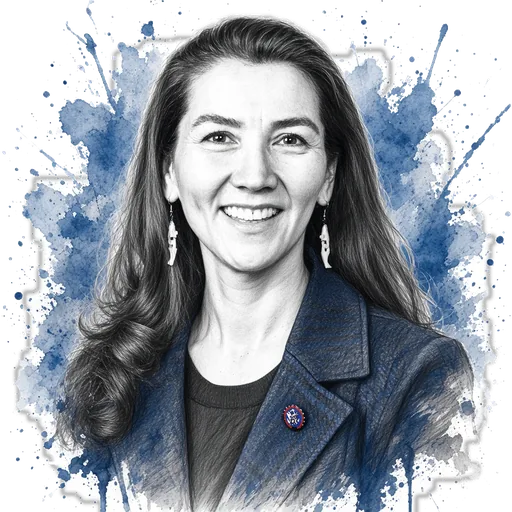
Mary Peltola

Dan J. Sullivan

Dan S. Sullivan
2. Texas
One of the most interesting races this cycle. Democrats are used to disappointment in Texas, including from young, charismatic candidates (regards to Beto O'Rourke), but this time James Talarico may have a real edge over his opponent, Ken Paxton. Paxton, the Texas attorney general, was impeached by the (Republican) Texas Legislature on a series of corruption charges, including the theft of a luxury pen, and is going through a divorce. Meanwhile Republican attempts to paint Talarico as "crazy" (including a claim that he was admitted to a psychiatric hospital during a bout of flu) are working less well: according to RCP, Talarico leads Paxton by 1.8%, and by 2.9% according to Silver.
In presidential elections Texas, with its 40 electoral votes, is the Democrats' holy grail, but a Senate win could also point in a good long-term direction for them: Texas is a relatively young state (a median age of 36.2, against 39.5 nationally) and 40% Hispanic, two groups that moved toward Republicans in recent elections.
Holds the seat nowJohn CornynRepublican
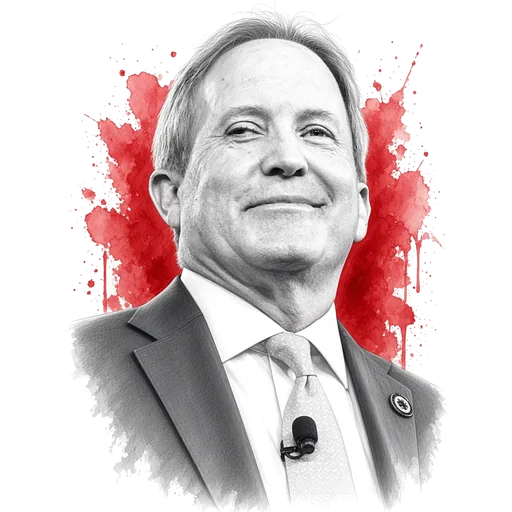
Ken Paxton

James Talarico

Ted Brown
Avery Ayers
Bradford 'brad' Hall
Zul Mohamed
Jade Simmons
3. Kansas
The last time Kansas sent a Democratic senator to Washington, Donald Trump had not yet been born, and this time Democrats may make history. Adam Hamilton, a pastor who leads the largest church in Kansas, is ahead of the incumbent senator, Roger Marshall (by 3.9% according to Silver; I found no RCP average).
Among the reasons Kansas is in play: the rise in fuel prices, diesel above all, which hit the Kansas farm economy hard (and led Trump to announce an $8 billion aid program), and the deal to import beef from Argentina, which by some estimates has hurt the local beef industry.
Holds the seat nowRoger MarshallRepublican
David Graham

Adam Hamilton

Roger Marshall
4. Iowa
The Hawkeye State is one of Republicans' (relatively) safe spots. Running for the seat of the retiring senator Joni Ernst is the Republican congresswoman Ashley Hinson, against Josh Turek, a member of the Iowa House of Representatives. The race between them is very close: Hinson leads by 0.5% according to RCP, and Turek by 0.9% according to Silver.
Holds the seat nowJoni ErnstRepublican

Ashley Hinson

Thomas Laehn

Josh Turek
5. Michigan
Perhaps the race that has drawn the most attention in Israel, because of the candidacy of Dr. Abdul El-Sayed, the former health director of Wayne County, against the former congressman Mike Rogers. The pro-Israel lobby, and recently also El-Sayed's rival from the primary, Haley Stevens, have mobilized to try to stop El-Sayed (Stevens more implicitly, without publicly calling on voters not to vote for him). So far he holds a relatively large lead (3.9% according to Silver, 3.5% according to RCP).
Interestingly, El-Sayed sometimes seems to be running two different campaigns. When he is in control, his campaign focuses on "everyday life" issues, led by the cost of living and health insurance, and tries to show that Rogers would be Trump's instrument in the Senate. But when he is asked about his loyalty to the Constitution (even though he is an American citizen), about condemning the Muslim Brotherhood or about his attitude toward Israel, he tends to answer not only firmly but at times outright aggressively. Even the hosts of Pod Save America, who not only support him as a candidate but count him as a personal friend, said that this combative style, which bursts out of him around a few specific issues, pushes away voters whose support he needs. One can assume that the more events drag El-Sayed toward these subjects, the greater the chance that he pushes away swing voters.
Holds the seat nowGary C. PetersDemocratic
Lydia Christensen

Abdul El-Sayed
Walter P. Kristy
Tim Long
Douglas P. Marsh
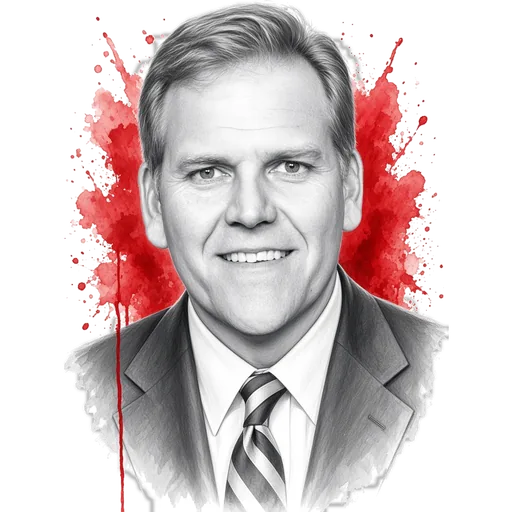
Mike Rogers
6. Maine
After Graham Platner entered the race and then withdrew, the Maine race has dropped somewhat out of the news, but it is still extremely close. Susan Collins, the Republican who has served for 36 years and Murkowski's partner in the party's "moderate wing", trails Troy Jackson, the former president of the Maine Senate, by 1.4% (according to RCP) and by 2.5% according to Silver.
Jackson may not flirt with antisemitism the way Platner did, but he has said on several occasions that Israel is committing genocide in Gaza and that he will never vote for aid to Israel. The fact that this is not a blue-haired student from Columbia but a relatively conservative logger from rural America says something about how Israel is losing its hold on the working class.
Holds the seat nowSusan M. CollinsRepublican
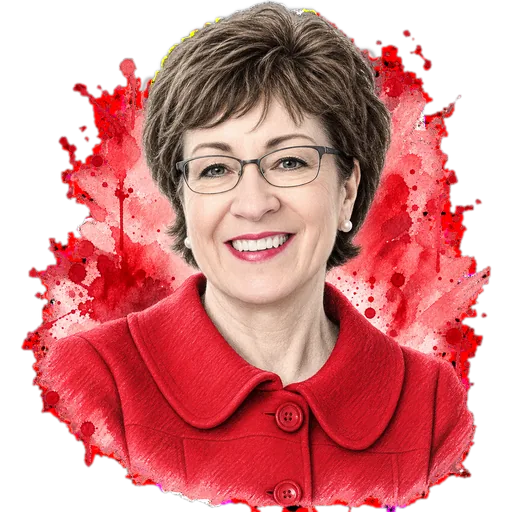
Susan M. Collins

Troy D. Jackson
Brent Andrews
Sigrid Ann Olson
Gina Oswald
Joseph Steinberger
Michael Turcotte
Ashley J. Webb
7. Ohio
The former "chessboard state", which was the swing state from 1960 to 2020, has turned sharply Republican over the past decade, but now it looks within Democrats' reach. The former senator Sherrod Brown leads the incumbent, Jon Husted (by 2.6% according to RCP and 3.1% according to Silver), who was appointed to replace JD Vance at the start of 2025. In the race for governor of Ohio too, the Democrat Amy Acton leads the Republican Vivek Ramaswamy by a slight margin. If both win, Democrats may read it as a pointer for 2028 and try to make Ohio a swing state again.
Holds the seat nowJon HustedRepublicanappointed

Sherrod Brown

Jon Husted
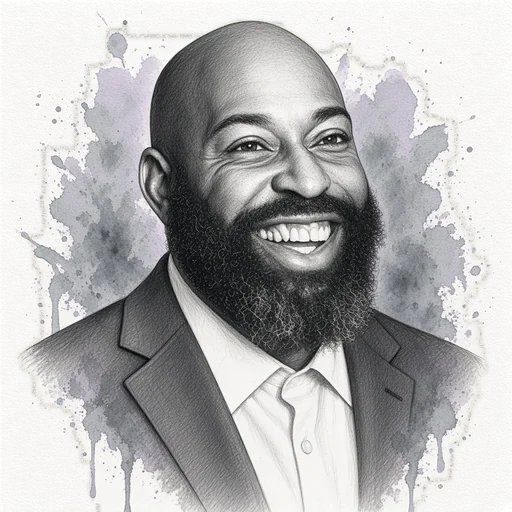
Greg Levy

William Redpath

Amy Acton
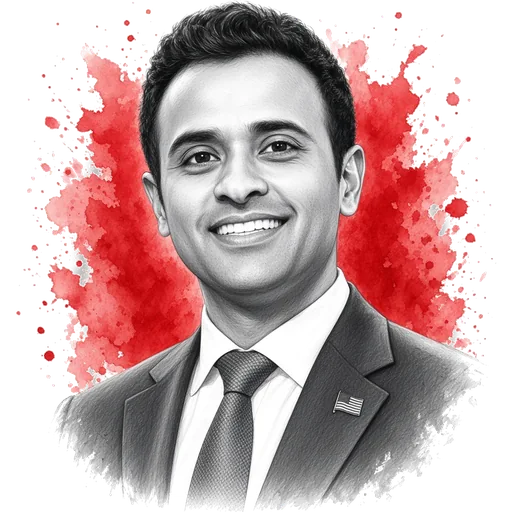
Vivek Ramaswamy
Don Kissick
8–9. North Carolina and Georgia
Although both are clear swing states, and both voted for Trump in 2024, the Democratic candidates lead safely in both. In Georgia, Jon Ossoff (considered a strong presidential contender for 2028) leads by 8.2% according to RCP and 10.4% according to Silver, and in North Carolina Roy Cooper (perhaps less charismatic than Ossoff, but on paper better suited to run for president, since he is more conservative and a Christian) leads by double digits on both measures.
Holds the seat nowThom TillisRepublican
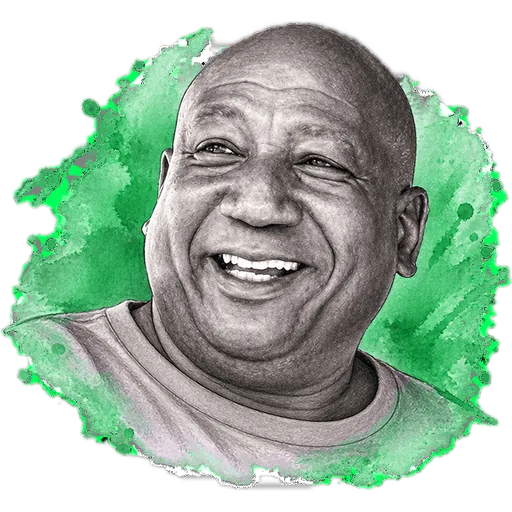
Michael Dublin

Michael Whatley
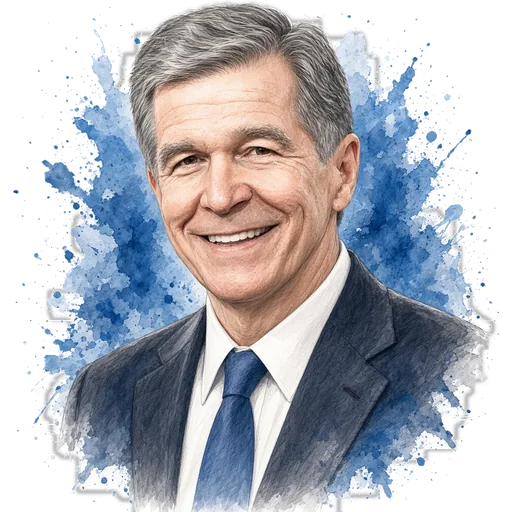
Roy Cooper

Shannon W. Bray
Holds the seat nowJon OssoffDemocratic

Jon Ossoff
Democratic–No results yet
Mike Collins
Republican–No results yetOn what this means, the expectations and the developments ahead of the races themselves, I will write in my next post.
Sources
The views in this column are the author's own. Published with the author's permission.